
El Comité de Familiares de Detenidos-Desaparecidos en Honduras (COFADEH) was established on November 30, 1982, in the context of the implementation of the National Security Doctrine, during a period marked by widespread human rights violations in the country.
The doctrine entailed, among other things, the militarization of society and the subordination of public institutions to the armed forces. It was also characterized by systematic and selective violations of human rights.

The most emblematic violations included torture, politically motivated killings, and enforced disappearances.
By 1982, 69 families had been affected by enforced disappearances. On November 30 of that year, twelve of these families came together to establish COFADEH.
The Committee was founded with the clear objective of securing the safe return of relatives who had been disappeared by the State. In some cases, this goal was achieved, but in most cases it was not.
Between 1980 and 1989, 184 people were forcibly disappeared without the authorities investigating the crimes or bringing those responsible to justice.
In 1988 and 1989, the Inter-American Court of Human Rights found the Honduran State responsible for the enforced disappearances of Manfredo Velásquez and Saúl Godínez Cruz, ordering the State to compensate the victims’ families and punish those responsible.
Again, in 2003, the Court held the Honduran State responsible for the disappearance and subsequent killing of Juan Humberto Sánchez, which occurred in 1992.
Beginning in the 1990s, COFADEH broadened its mission to include the defense and legal representation of victims of serious human rights violations, the promotion of and training in human rights, as well as the investigation and documentation of cases.
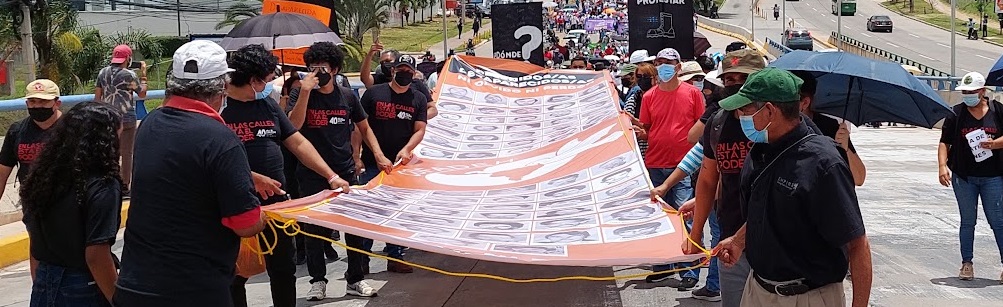
The organization also established strategic partnerships with similar organizations while maintaining its independence and guiding principles.
In the mid-1990s, COFADEH began recovering the remains of disappeared persons from clandestine cemeteries. Once this work gained official recognition, it was carried out in coordination with the Special Human Rights Prosecutor’s Office.
At the end of the 1990s, in 1998, COFADEH expanded its work to include the defense of collective rights, environmental rights, and freedom of expression.
Throughout its 42 years of existence, COFADEH has also contributed to the demilitarization of Honduras, the strengthening of democratic processes, and the continuous monitoring of public institutions and state security forces to ensure respect for human rights.
In 2001, the Honduran State granted COFADEH legal status through Resolution 24-2001. That same year, the organization received the National Human Rights Award, presented annually by the National Commissioner for Human Rights (CONADEH).
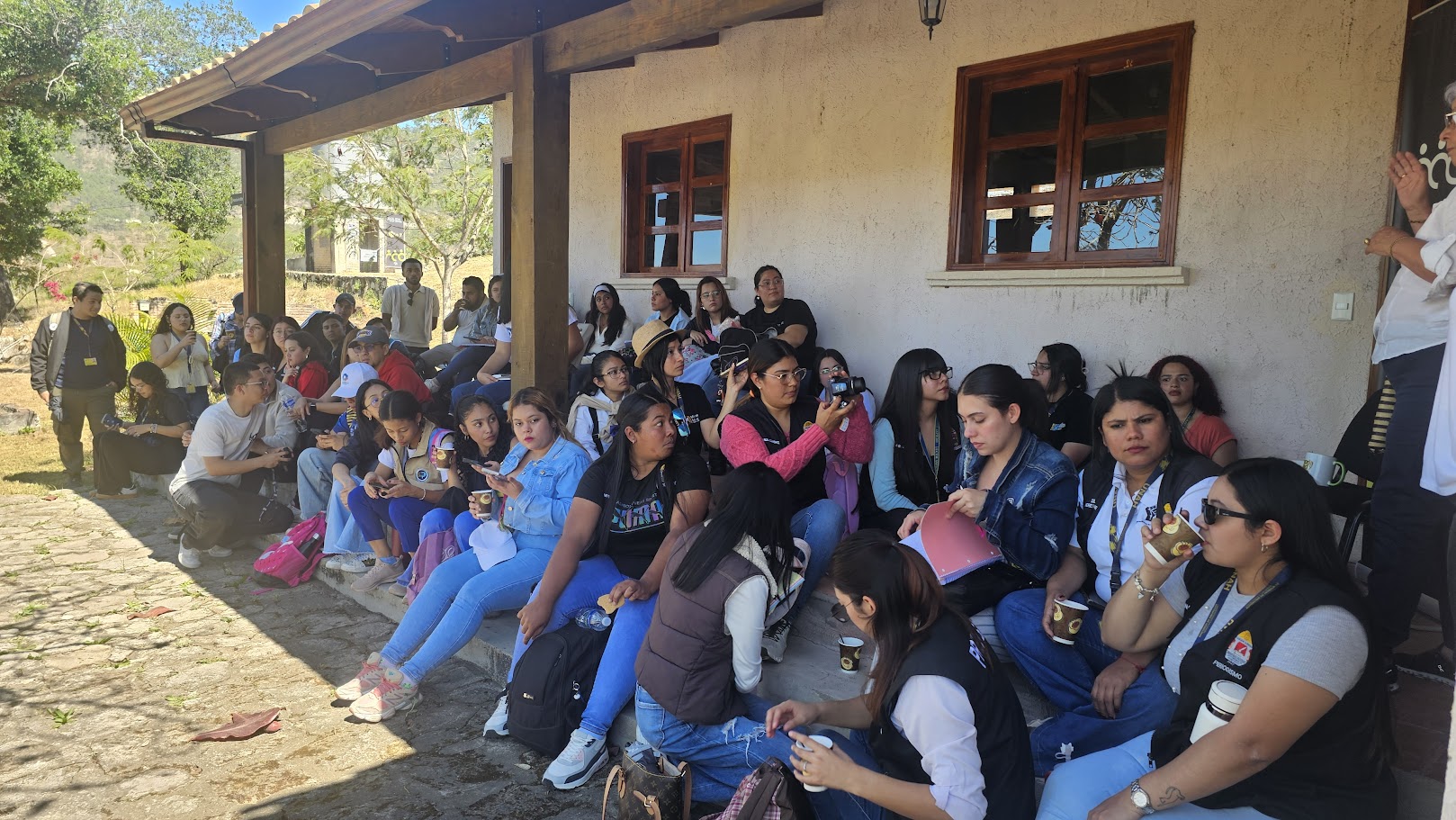
In the twenty-first century, COFADEH has worked to recover sites that were used during the implementation of the National Security Doctrine as torture centers, clandestine prisons, and clandestine cemeteries.
One such site is the property known as the “House of Terror,” located in the Amarateca Valley, Francisco Morazán, formerly owned by Colonel Amílcar Zelaya.
Today, COFADEH has established the Museum Against Oblivion at this site—a space for reflection on the violations of human dignity committed during the implementation of the National Security Doctrine in the 1980s, a period that left hundreds of people dead for political reasons, countless others tortured, and more than 184 people forcibly disappeared.
In recent years, COFADEH has also developed a draft Law on Victims of Serious Human Rights Violations Committed under the National Security Doctrine. The proposal was presented to President Xiomara Castro in August 2023 and submitted to the National Congress in early April 2024.
The proposed legislation represents a unique opportunity to advance a genuine process of transitional justice, democratic consolidation, and the rule of law.
The bill was developed with the advice and technical assistance of the Office of the United Nations High Commissioner for Human Rights (OHCHR) and Memoria Abierta of Argentina.
It is built around the five pillars of transitional justice: Memory, Truth, Justice, Reparation, and Guarantees of Non-Repetition.
COFADEH also advocates for the inclusion of the events that occurred during the implementation of the National Security Doctrine in the national school curriculum, so that future generations understand this period of the country’s history and ensure that it is never forgotten.
At the national level, COFADEH has established and trained several regional networks of human rights defenders, including the Lenca Indigenous Human Rights Defenders Network of La Paz (REDHIL-PAZ), the El Paraíso Human Rights Defenders Network, the Olancho Human Rights Defenders Network, the Ocotepeque Human Rights Defenders Network (DEOCODERH), and the Southern Human Rights Defenders Network (Redehsur). Together, these networks form the National Network of Human Rights Defenders (RENADH).
COFADEH is widely recognized as a leading source of expertise on human rights and public security in Honduras. It is a member of major civil society coalitions and serves as an important interlocutor for international human rights organizations.
COFADEH’s vision is to be a strong and well-established institution, recognized by society, working toward a Honduras free from impunity, with citizens empowered to defend human rights and preserve historical memory.
Tegucigalpa 1243 Honduras